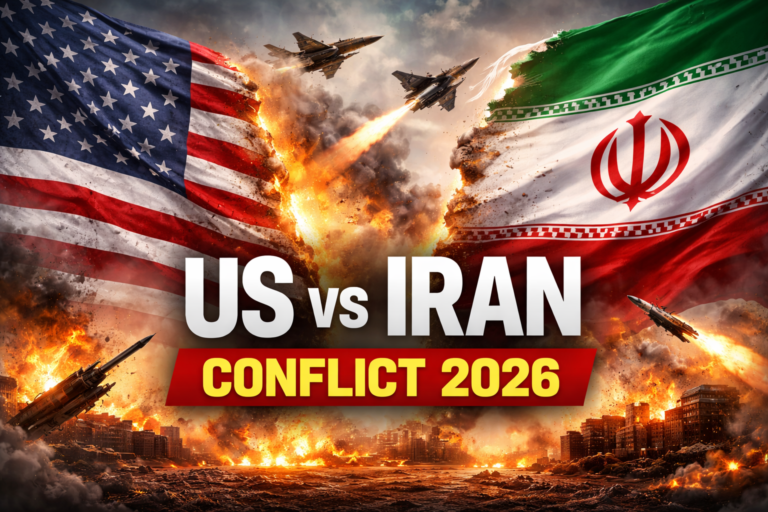
The geopolitical tensions between the United States and Iran have escalated sharply in 2026, creating one of the most serious global conflicts in recent years. The situation has drawn worldwide attention because it affects not only the Middle East but also global energy markets, international trade, and financial stability.
In this article, we explain the latest developments, the reasons behind the conflict, and how it could impact the global economy.
Background: Why the US and Iran Have Long-Standing Tensions
The conflict between the United States and Iran is not new. The tension dates back to the 1979 Iranian Revolution, when diplomatic relations between the two countries collapsed after the hostage crisis at the US embassy in Tehran. Since then, disagreements over nuclear programs, sanctions, regional influence, and military activities have kept relations hostile.
Over the years, negotiations and sanctions have alternated with periods of military tension. The collapse of the nuclear agreement negotiations and disputes over Iran’s missile capabilities have recently intensified these tensions.
The 2026 Escalation: What Triggered the War
The current conflict began in late February 2026, when the United States and Israel launched coordinated airstrikes against military and strategic targets inside Iran. The operation targeted missile systems, military infrastructure, and leadership facilities.
Following the strikes, Iran responded with large-scale retaliation, launching missiles and drones against military bases, embassies, and infrastructure linked to US allies across the Middle East.
These attacks quickly spread the conflict beyond Iran, affecting several neighboring countries.
Current Situation on the Ground
The conflict has intensified with continuous airstrikes, missile launches, and drone attacks across multiple regions.
Recent developments include:
Continuous US and Israeli strikes on Iranian military targets.
Iranian retaliation targeting US military bases and allies.
Missile and drone attacks across Gulf nations and surrounding regions.
Rising casualties and significant infrastructure damage.
Some countries in the Middle East have issued emergency alerts due to missile threats and potential regional escalation.
Meanwhile, the conflict has expanded into nearby countries as Iranian-linked forces target US positions in the region.
Global Impact: Why the World Is Concerned
The US–Iran conflict is not just a regional issue. It has major global consequences.
1. Rising Oil Prices
The Middle East produces a large portion of the world’s oil. As tensions escalate, global oil markets have reacted sharply. Oil prices have surged due to concerns that shipping routes and energy infrastructure could be disrupted.
Higher oil prices affect transportation, manufacturing, and consumer costs worldwide.
2. Disruption to Global Trade
Important shipping routes such as the Strait of Hormuz are critical for global oil supply. Any disruption in this region can affect energy shipments and international trade.
Travel and air routes in the Middle East have also been affected due to safety concerns.
3. Financial Market Volatility
Geopolitical conflicts usually create uncertainty in financial markets. Investors often react by moving money into safer assets such as gold, government bonds, and stable currencies.
Stock markets around the world may experience increased volatility during such conflicts.
India’s Perspective
India is closely watching the situation because the Middle East plays an important role in India’s energy supply and trade. The Indian government has been monitoring developments and briefing Parliament on the situation in West Asia.
Any major disruption in oil supply could influence India’s fuel prices and economic planning.
Possible Future Scenarios
Experts believe several outcomes are possible depending on diplomatic efforts and military developments:
De-escalation through negotiations
International pressure could push both sides toward diplomatic talks.
Prolonged regional conflict
The war could continue for months, involving more countries and regional alliances.
Global economic consequences
Prolonged instability could impact energy prices, trade flows, and global markets.
Lessons for Investors and the Public
Global conflicts highlight how interconnected the world economy has become.
For individuals and investors, it reinforces important financial principles:
Diversify investments across asset classes
Maintain an emergency fund
Avoid panic decisions during geopolitical events
Focus on long-term financial planning
Understanding global events helps people make more informed financial decisions.